beta.weather.gov
A public weather source when every minute matters
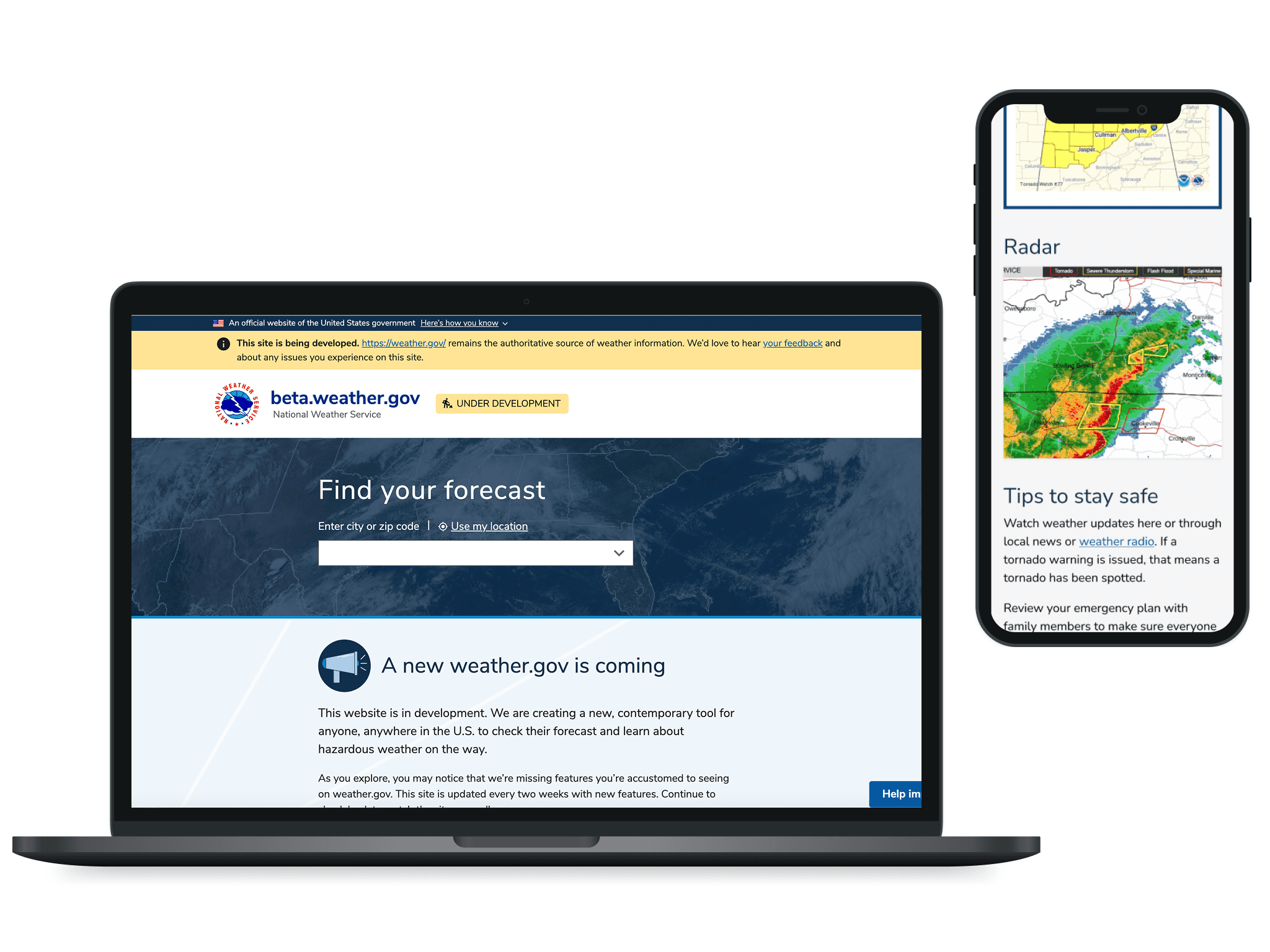
I worked on beta.weather.gov for 2 years, from early discovery to continued feature improvement
Summary
Client
National Weather Service
Role
UX Research + Design
My contribution
UX research
Research operations
UX strategy
Interface design

Forecasters work in person, using local machines - so we went to some of the 122 forecast offices to see their workflows and run workshops

Snippets from our initial analysis and shareout, based on 30+ conversations with internal stakeholder and end users

Paper prototypes and wireframes helped us to test out basic concepts, and get fast feedback
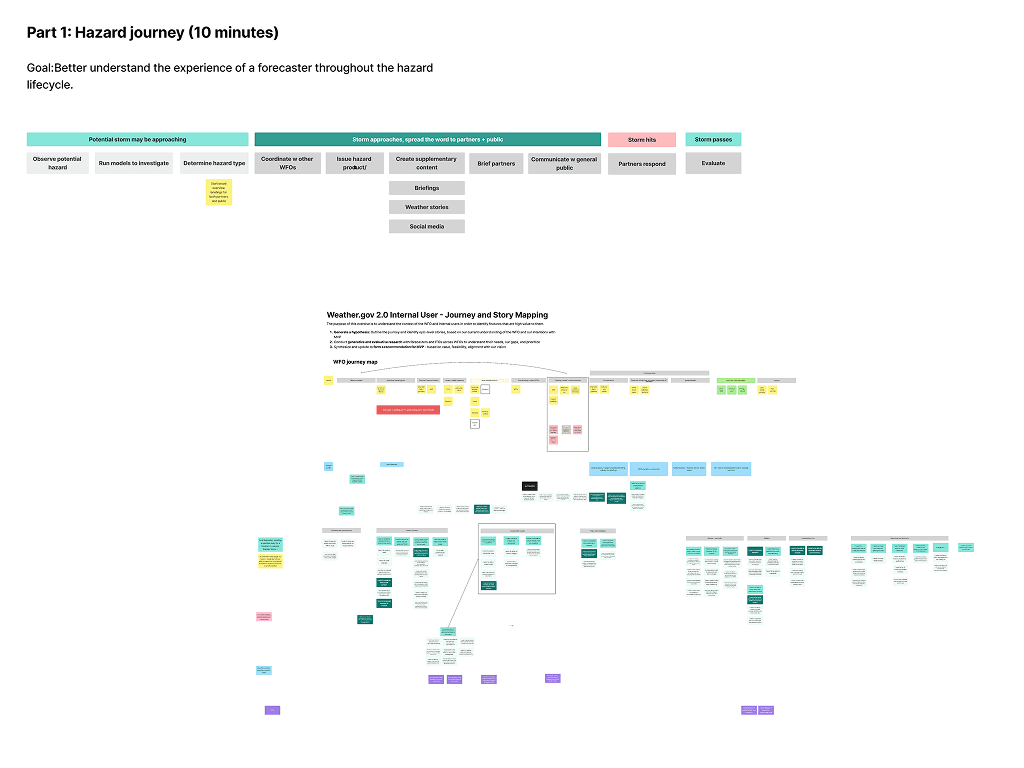
Early journey maps and service blueprints helped us understand the end to end experience for both internal and external users (forecasters and emergency managers). I used these for internal team alignment workshops and brainstorming exercises.
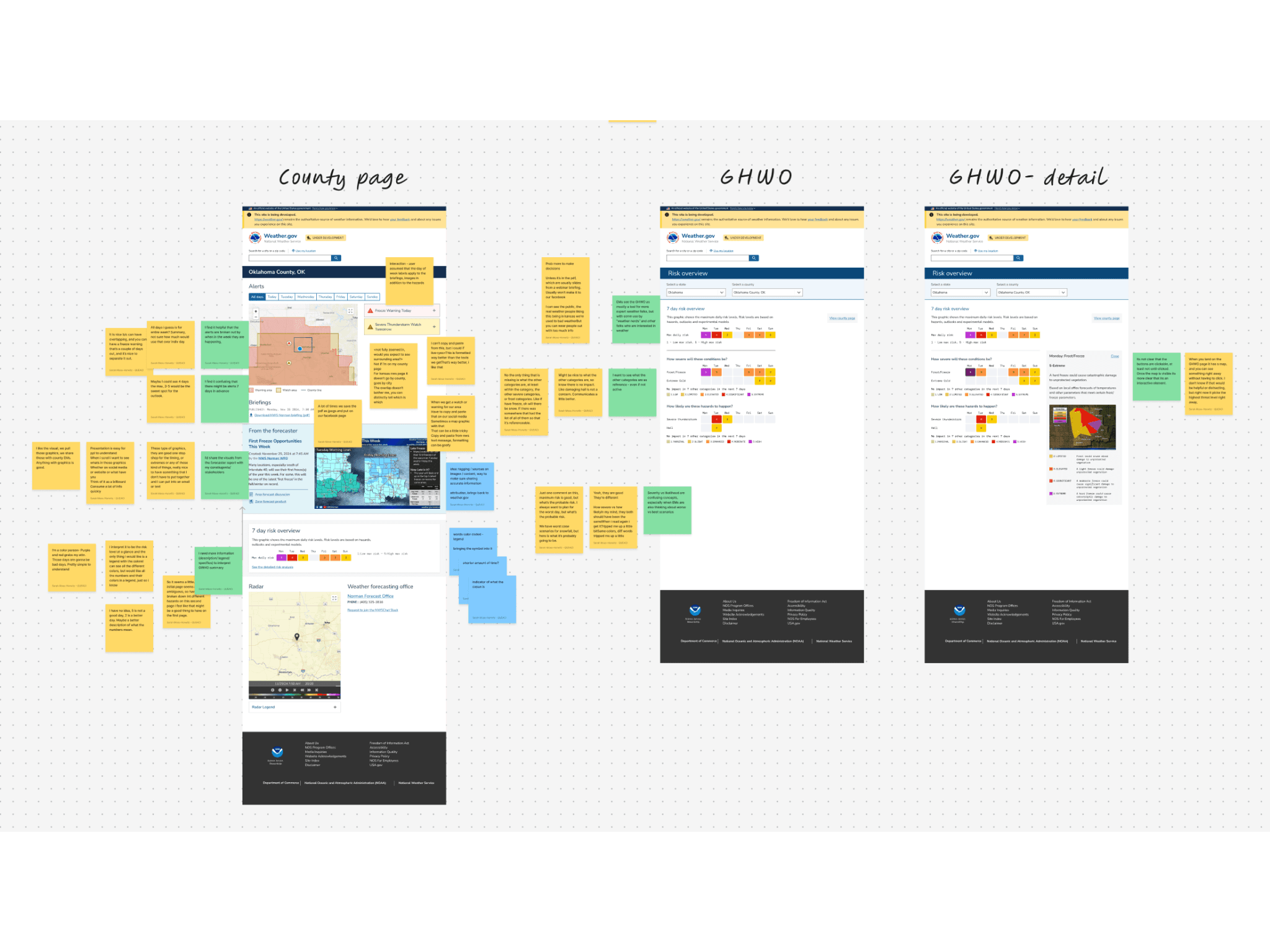
We continued to do iterative design and research cycles throughout the course of the project. The above was from a round testing a county page and a feature to show weather based risks, which we tested with both emergency managers and the public.
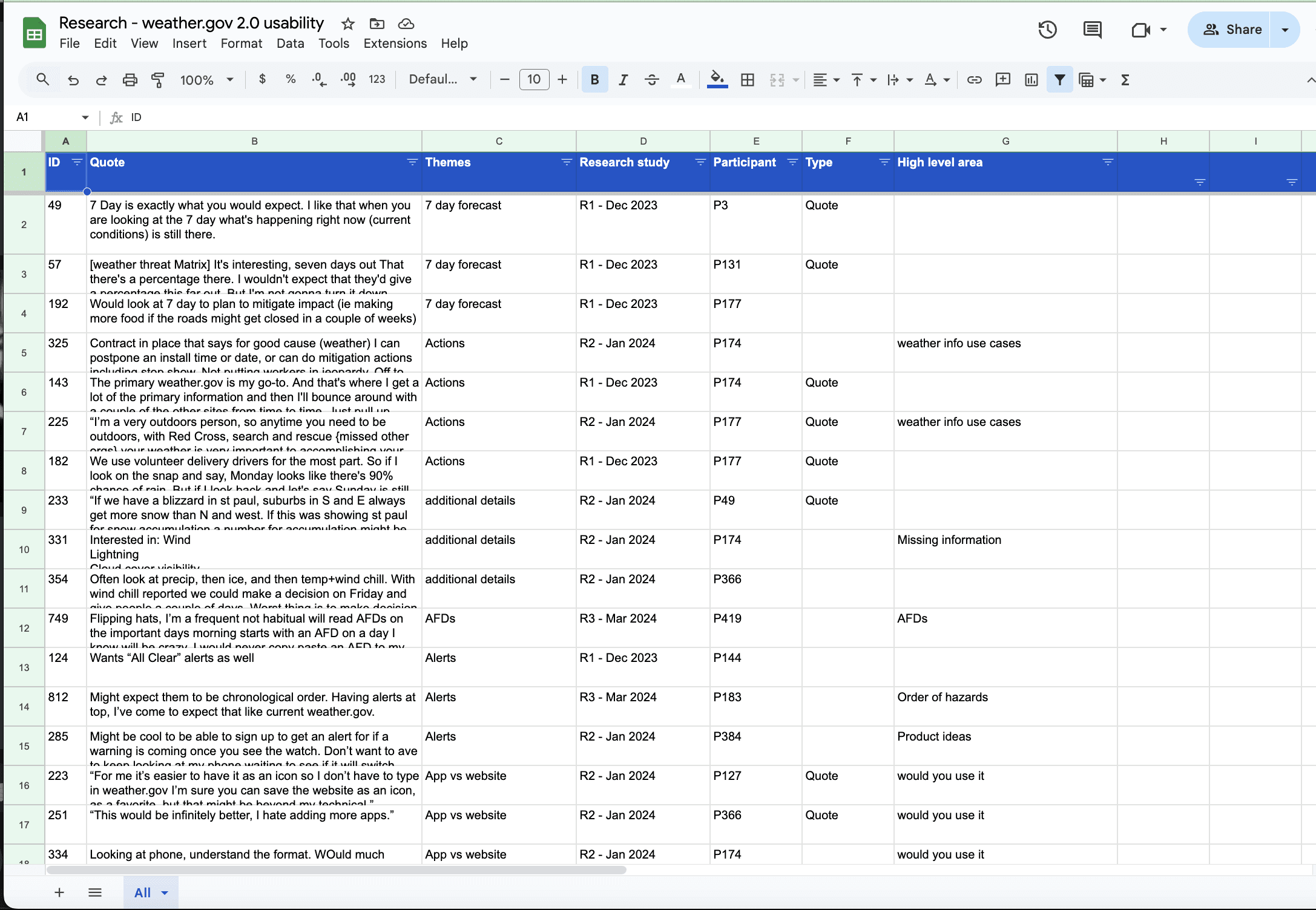
The project extended almost two years, so keeping track of themes over many research rounds was invaluble. I stored usability notes in a google spreadsheet (formerly an airtable).
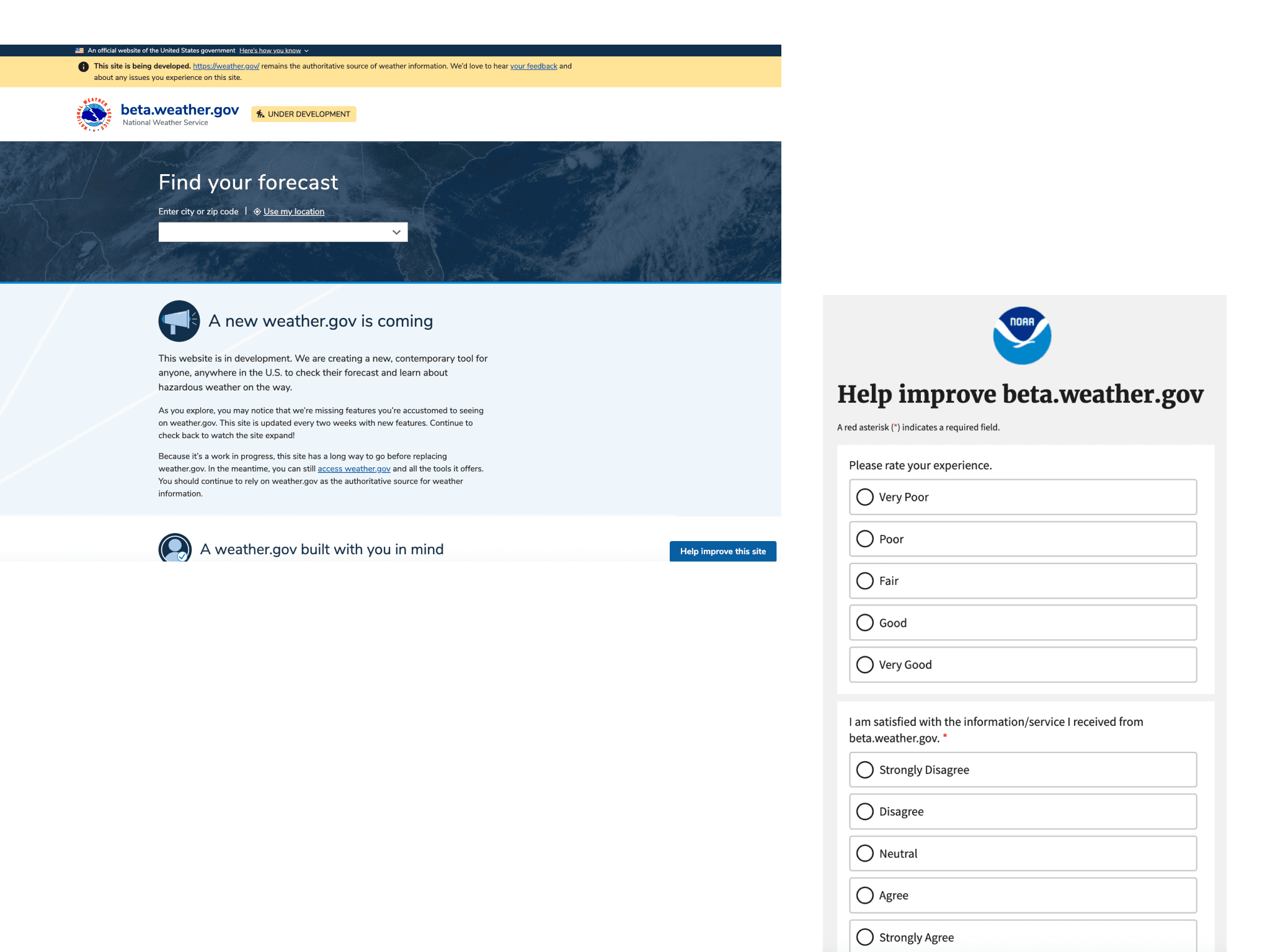
While the beta site is not a "source of truth", it does get shared around, so we made sure to have a feedback opportunity integrated into the site using Touchpoints. Product owners, design and forecasters at NWS reviewed and prioritized feedback biweekly.
Beta.weather.gov overview
We learned in research that most people, public or emergency managers, have a hard time finding information on weather.gov. We built beta with the idea that especially in hazardous weather, you need all the tools and information in a single place, localized dynamically to the types of information most relevant to you.
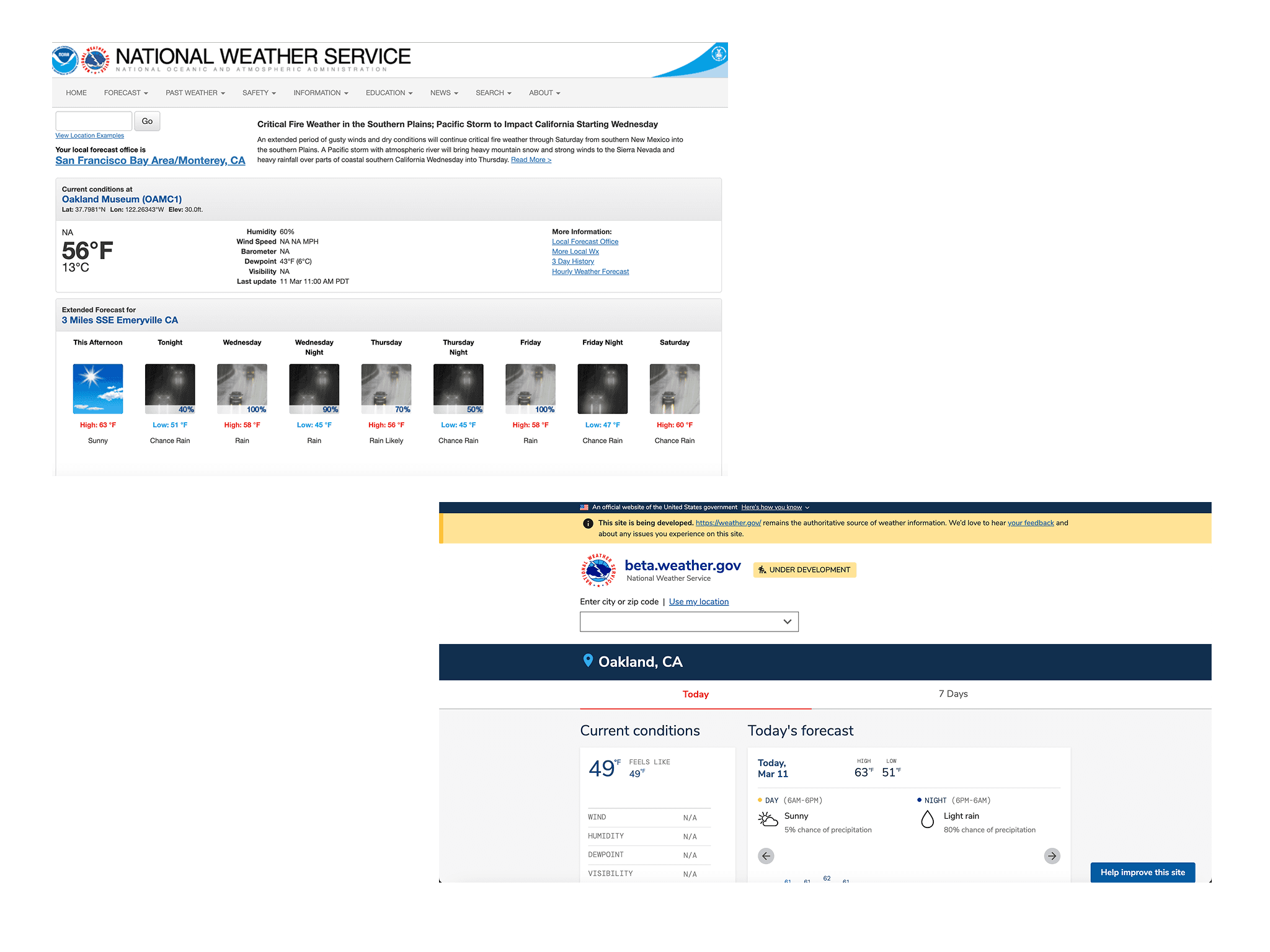
In the existing weather.gov, users had to know where to go to find information about a given location. Important forecaster expertise was hidden in tiny links at the bottom of the page, and on entirely separate "Weather Forecast Office" pages. We approached the location weather page as a central space to surface the most revelant information - dynamic based on what the weather actually is.
Alerts
Hazardous alerts are the most important piece of information, and the most buried in the existing weather.gov. Rather than making folks click and go somewhere else to find out about the alert, we prioritized integrating the alerts directly into the first view. We also worked to pull in safety information and interactive map because we heard that its hard to visualize where an alert is referring to.

Forecaster expertise
Forecasters have years of expertise understanding and interpreting the weather - they do it 24/7. Yet much of their work is hard to find, and also varies significantly from office to office, making it hard for folks that work across offices to make sense of it. More importantly, we heard from the public and partners that they do care a lot "what the forecaster is thinking". We worked to pull in 2 of the products that forecasters produce multiple times a day - the "weather story" and the "Area Forecast Description" (AFD), and also worked to creating training and governance to help these pieces of content be better.
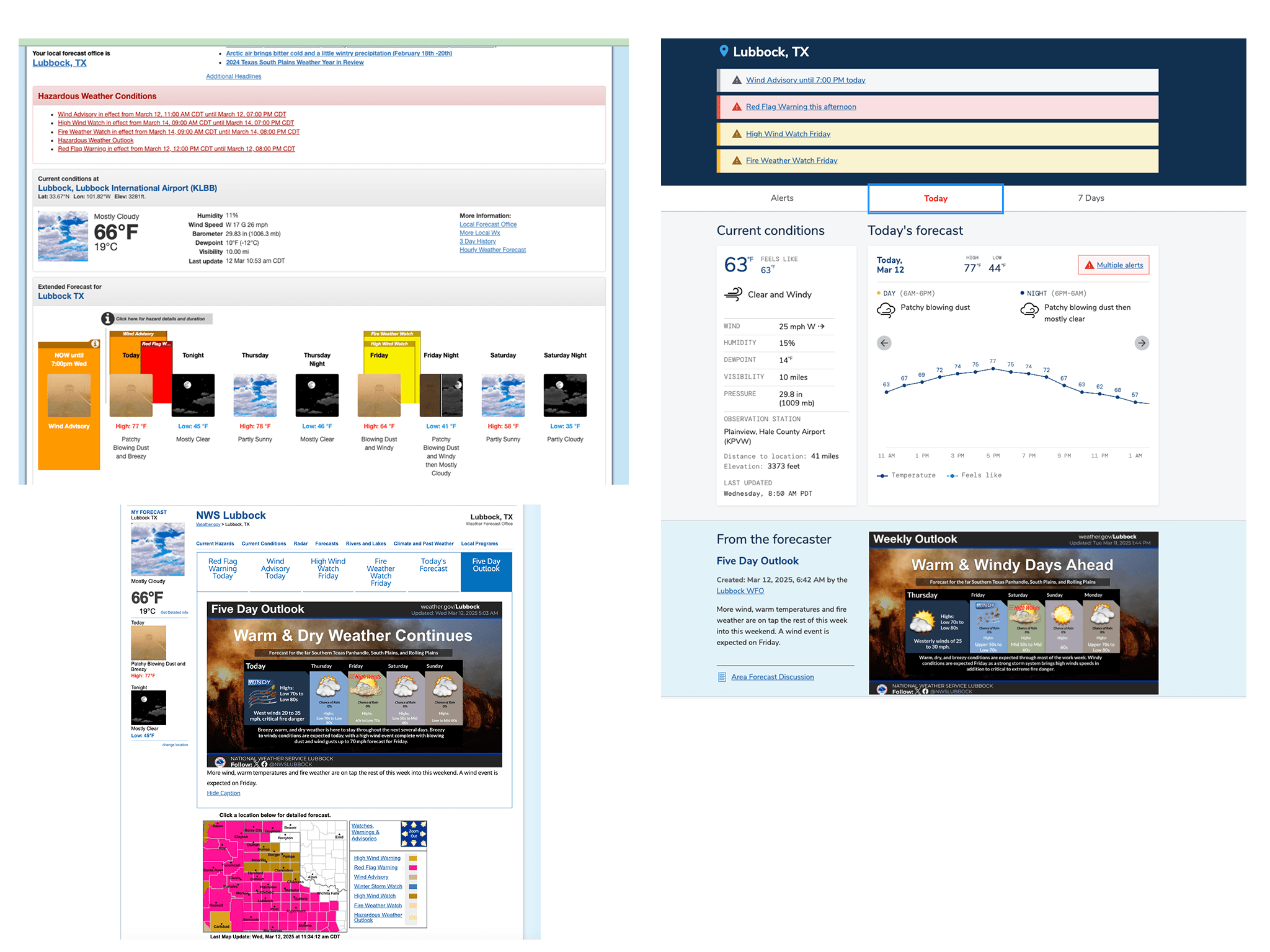
To the left: Weather stories on the existing weather.gov, on an office page. The tabs are also custom code that offices DIY.
To the right: Weather stories in beta, integrated into the "today" tab.
We built a beta website that supports the core needs of partners and the public, with a framework to expand
While my engagement on the project was cut short due to politics, ie government wide reductions in force, we still were able to have major impact on National Weather Service.
While not officially yet launched, beta.weather.gov is publicly available, and usage has increased 300% in 2025 alone.
The feedback mechanism receives upwards of 100 submissions per week, and is triaged by an internal team of volunteer forecasters.
Based on our strong recommendations, an API team was sprung up to focus on improving the critical API infrastructure that communicates weather forecasts, alerts and current conditions and is integrated with most consumer weather tools.